
Between Prophetic Tradition and the Reality of Delay
The echo of the noble prophetic tradition — "Wisdom is the believer's lost property; wherever he finds it, he is most deserving of it" — still rings in our ears, but standing in reality reveals a stark paradox: we are the most deserving of wisdom, yet we are the last to reach it! Artificial intelligence, the greatest cognitive revolution witnessed by the era, is in the hands of others shaping the world's consciousness and drawing the features of the future, while the Muslim mostly stands watching, or — at best — consuming what others produce. Here emerges the central role of the Muslim: what is the true role awaiting the Muslim in this frantic race?
The Muslim is Not Just a Consumer, but the Ethical Founder
When we examine the nature of artificial intelligence, we find that its greatest problems are not technical, but ethical. Reports from international organizations and statements by top developers themselves confirm that the real danger is not the machine's ability to surpass humans, but the absence of the ethical compass that guides its path. Here emerges the central role of the Muslim: they possess the most complete ethical system in human history, because it stems from divine revelation, not fluctuating human desires. The objectives of Sharia (Maqasid al-Sharia) — preserving religion, life, intellect, wealth, and lineage — are not just jurisprudential theories, but a complete ethical constitution that can serve as the optimal framework for developing AI, and even testing its true value. Thus, the Muslim is not required to be merely a "consumer" running after the latest app versions, nor a "copycat" replicating what others do, but rather the legitimate and ethical founder of this technology.
The Absence of Civilizational Witness... Where is the Flaw?
If the Muslim is most deserving of leading this revolution, why do we see them at the tail end of the procession? The answer lies not in a single factor, but in the intertwining of structural factors spanning decades:
- Cognitive Defeat: Education in many Islamic countries still relies on rote memorization and recall, whereas AI needs minds that question, critique, and think outside the box. It is a culture that produces a "consumer" rather than a "creator".
- The Unhealthy Separation Between Religion and Worldly Life: Unfortunately, a virtual gap has grown in the Muslim consciousness between "religious knowledge" and "worldly knowledge," as if learning programming or advanced mathematics were a deficiency in religion! This separation is the most dangerous affliction to strike the Ummah.
- Intimidation, Not Empowerment: It is true that there are legitimate religious warnings against using AI in issuing fatwas or interpreting the Quran without guidelines. But the problem is that these warnings, instead of being a motive for guidance and control, became in some circles a pretext for general intimidation, distancing people from the field of creativity.
Roadmap... What is Actually Expected of the Muslim?
Time passes quickly, and the technology race does not wait. What is required today from the Muslim — individuals and institutions — is not theorization, but an integrated renaissance project:
First: Rebuilding the Muslim Mind
A radical review of educational curricula is a must, producing a student who combines memorizing the Quran with understanding AI, and mastering the Arabic language with mastering programming languages. A generation is required that sees technology as an extension of its call, not a threat to it.
Second: Establishing Tech Jurisprudence
We need specialized religious bodies bringing together scholars and programmers, not just to issue fatwas of prohibition and permissibility, but to produce technical standards for developing Islamic algorithms that respect privacy, combat bias, and serve the objectives of Sharia.
Third: Serious Investment
Some Islamic countries have already begun encouraging steps in attracting talent and building technology cities. But what is required is to multiply this effort tenfold, with a special focus on supporting startups that serve Islamic values.
Fourth: Exporting the Model
It is not enough to develop for ourselves, but we must offer the world an alternative model to the Western model, which has proven its ethical failure. Muslims must export an "ethical artificial intelligence" that proves technology can be in the service of mercy and justice, rather than profit, espionage, and control.
The Required Warning... Between Fear and Negligence
Amidst this enthusiasm for empowerment, a precise fraternal warning must be made: the Muslim who runs after technology without carrying their identity and ethics is no better than the one who avoids it. Many studies have warned that AI platforms may be used to manipulate collective consciousness, weaken identities, and spread moral chaos. Therefore, the Muslim must be a conscious leader, not a led follower, keeping the persistent question in mind while developing or using any technical tool: "Does this bring me closer to God, or push me away? Does it serve human humanity, or dissolve it?"
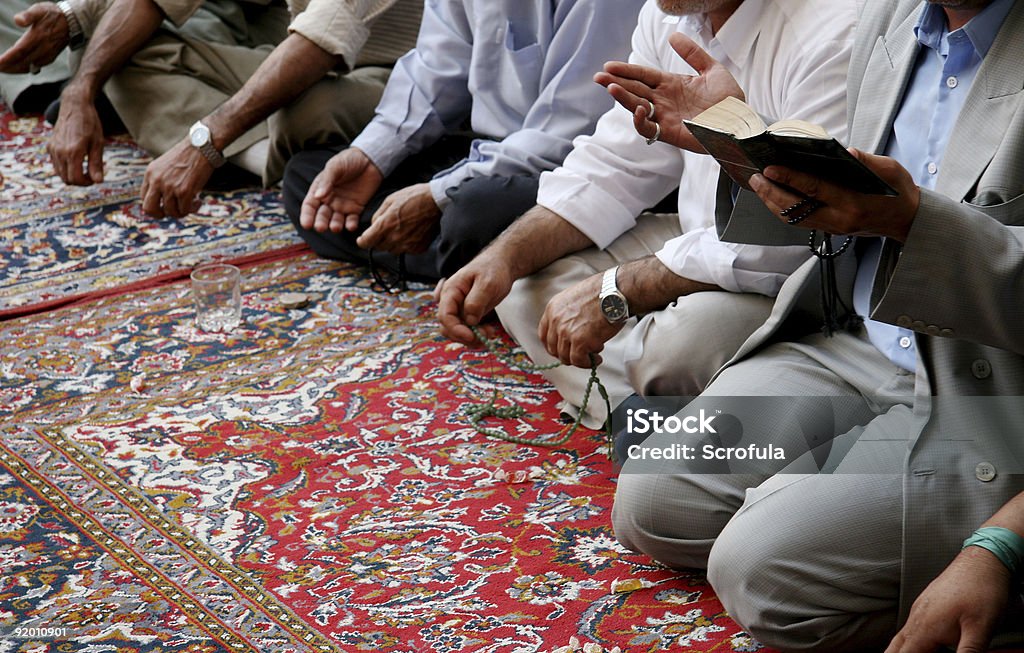
Perhaps this balance appears clearly in moments of reverence where the Muslim reclaims their humanity away from screens, remembering that technological progress is a means to a higher end.
The Muslim is the Missing Leader... And It Is Time to Return
After this tour between hopes and expectations, it becomes clear that the true role of the Muslim was never marginal or consumerist. Islam came to declare that man is a vicegerent on earth, and this vicegerency is not achieved by withdrawing from the world or fearing its technologies, but by taking the initiative and directing the tools of the era to serve the common good.